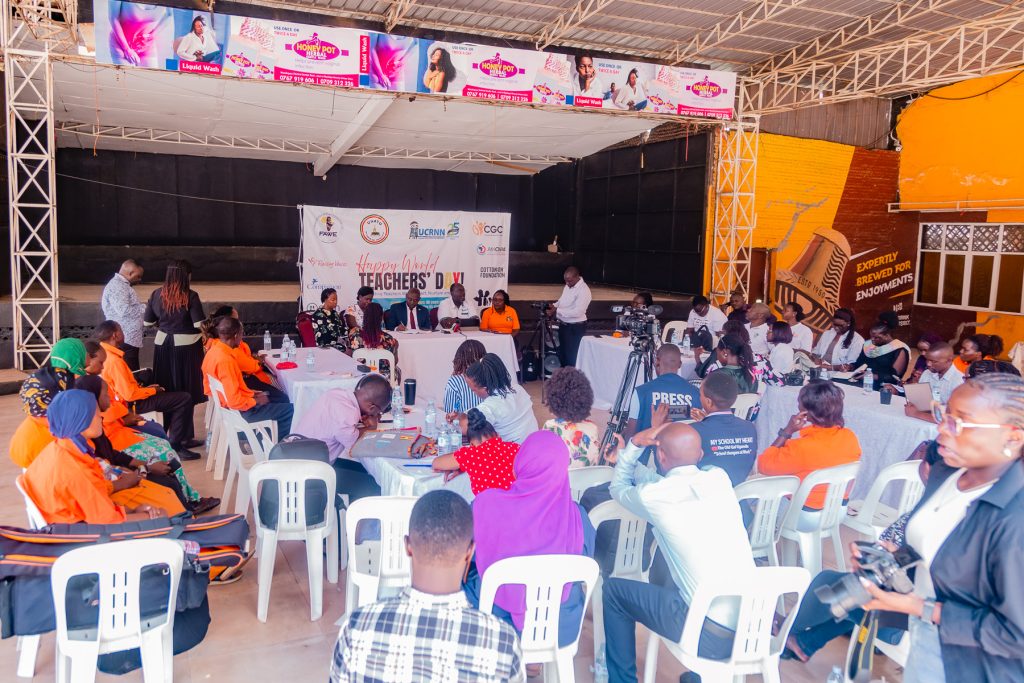
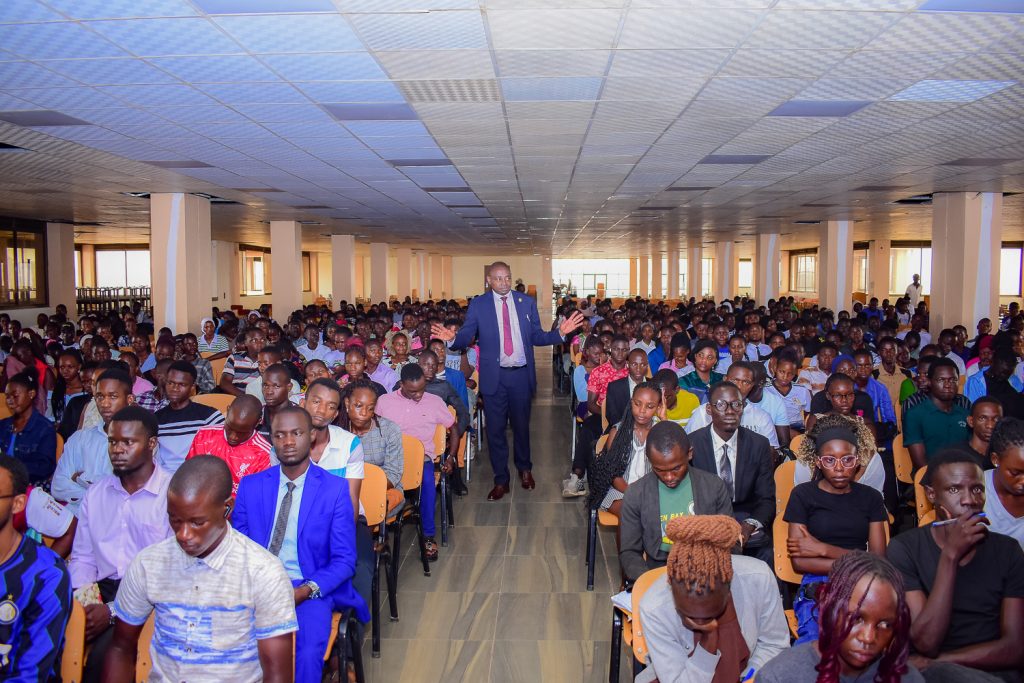
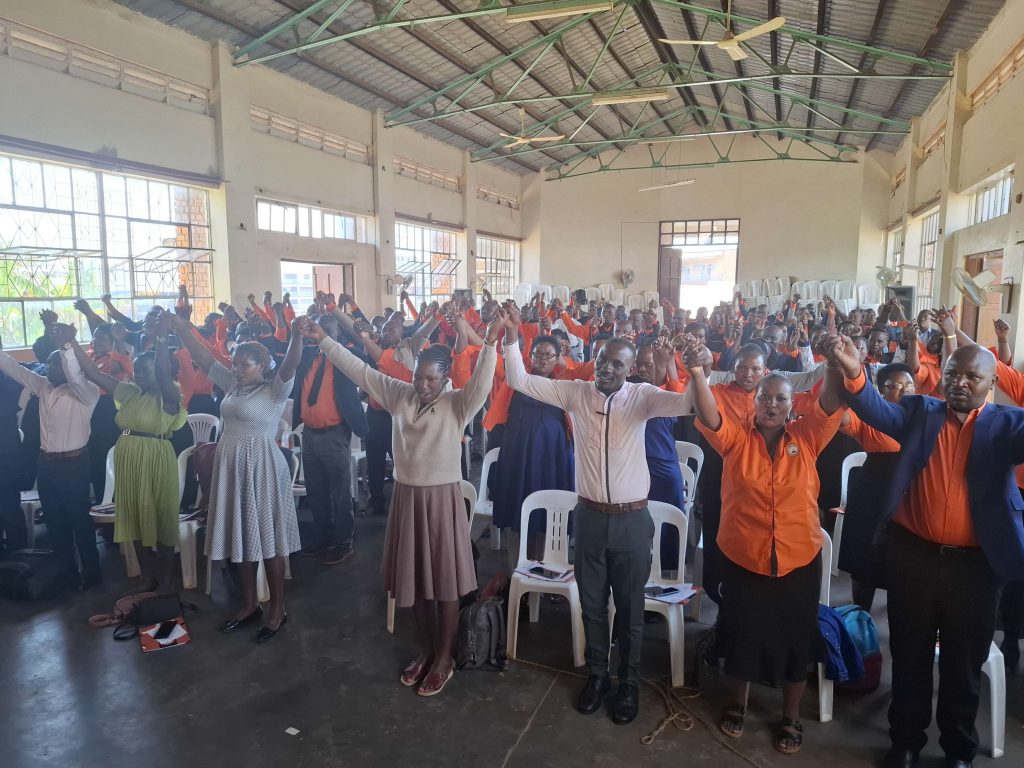
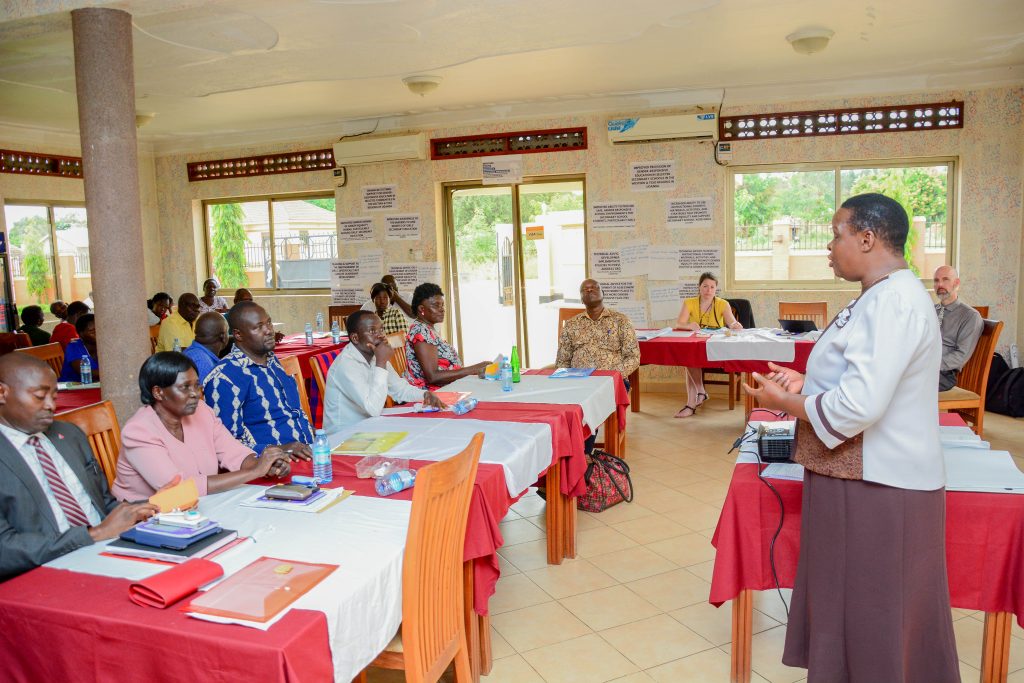
On April 5th, 2025, stakeholders in the SIMAMENI Project schools convened at North East Villa Resort in Kumi District for a follow-up progress meeting aimed at evaluating the impact and sustainability of gender-responsive education interventions in their schools. The meeting brought together District Education Officers (DEOs) from Ngora, Kumi, and Bukedea; Board of Governors (BOG) and Parent-Teacher Association (PTA) chairpersons from the project implementation schools and their headteachers. Also in attendance were UNATU branch chairpersons from Kumi, Bukedea, Serere, and Ngora. They were led by the Vice National Chairperson and the General Secretary. This was done in the presence of the Canadian Teachers’ Federation (CTF) Project Officer, Simameni.
In his welcome remarks, the UNATU Teso Regional Chairperson, Ojilong Paul, expressed gratitude for the participants’ continued dedication to the project and to the cause of gender equity in schools. He encouraged school boards to allocate land for sustainable Simameni initiatives, such as agricultural projects. He called on participants to reflect on the progress made in closing gender gaps and share their experiences openly.
The meeting’s purpose, presented by Grace Alubo—the SIMAMENI Project Officer for the Teso region—centered on reviewing each school’s progress using a gender-responsive checklist distributed to the project schools. Focus areas included menstrual hygiene, water and food safety, school environment, student clubs, financial resource use, and inclusivity. Alubo commended school leadership and stakeholders for their active involvement and consistency.
CTF’s Program Officer, Cheryl Sheffield, described Simameni as an outstanding initiative in the eyes of CTF and Global Affairs Canada. she emphasized the significance of the project’s clubs and their potential for expansion, highlighting the recent addition of sewing machines to schools as a noteworthy development. She encouraged participants to share their practices and knowledge, particularly regarding external funding opportunities such as computers, wells, and boreholes, to foster mutual support and resource utilization. She mentioned that Simameni aims to address gender gaps, embodying the principle that “everybody can,” and stressed the project’s commitment to uplifting both girls and boys. She highlighted the gender checklist as a valuable tool for celebrating achievements and identifying areas for collaboration and support. Reflecting on the enduring partnership between UNATU and CTF, she expressed gratitude for the mutual support and emphasized that “respect” encapsulates the essence of Simameni. She concluded by encouraging selflessness and the use of acquired training and tools to sustain and advance the project’s objectives.
A joint presentation by DEO Ngora, Ochung Moses Mathew, and DEO Kumi, Adong Sarah, showcased Simameni’s achievements and emerging challenges. Ngora district reported a sharp rise in school enrolment—from 150 learners in 2017 to over 1,000 in 2025—attributed to improved sanitation, psychosocial support, and the formation of Simameni clubs. DEO Adong emphasized the need to improve student accommodation, ensure safe transportation to and from schools, enhance school feeding programs, achieve gender balance among staff, and implement documentation to track progress.
UNATU General Secretary Baguma Filbert Bates officially opened the meeting, urging participants to sustain the project’s legacy beyond its funding cycle. While recognizing the project’s roots in empowering the girl child, he made a passionate appeal for increased support to the boy child as well. He warned against overlooking their needs, especially in areas like mental health, scholastic support, and emotional well-being. Baguma also emphasized the importance of achieving gender balance among teachers and safeguarding learners’ media consumption. He called for proactive community reporting on school development needs.
Gender Officer Aja Joan facilitated an engaging group discussion focused on deepening school-community engagement and sustainability. Participants, grouped by school, reflected on three key areas: what they are currently doing to promote community involvement, the challenges they face, and opportunities for external support. They shared that regular PTA and BOG meetings, co-curricular activities involving local communities, and outreach programs were already in place. Despite this progress, common challenges such as limited access to water, financial constraints, and gender biases remain. Some schools had successfully secured external support, including computers and boreholes. In her remarks, Aja Joan urged participants to strengthen their capacity to lobby for funding, promote gender-inclusive education, and invest in teacher training on gender sensitivity. She also emphasized the need for curriculum development that prioritizes student well-being and reproductive health. The session reaffirmed the shared commitment to building inclusive, empowered, and sustainable learning environments.
In a key session, Mr. Okurut George, DEO of Bukedea, emphasized the pivotal role of local government in sustaining Simameni’s gains. He noted that policy enforcement, community engagement, infrastructure support, and training for school staff all contribute to embedding gender equality practices and ensuring the long-term success of the project.
In her closing remarks, the UNATU Vice National Chairperson thanked all participants, facilitators, and local branch leaders for their unwavering commitment. She urged schools to revisit the gender checklist with fresh eyes, share information across institutions—including primary schools—and continue to design activities that leave a lasting legacy. She reaffirmed the importance of skilling as a long-term investment and praised the recent delivery of sewing machines to the project schools as a timely and practical intervention. She called on educators to guide learners toward skill-based careers and urged them to pass these opportunities forward.
The SIMAMENI Project continues to inspire transformation in Uganda’s education landscape by empowering communities to create inclusive, supportive, and sustainable learning environments. With strong local leadership, teacher dedication, and community involvement, the project is paving the way for a future where all children—regardless of gender—can thrive.