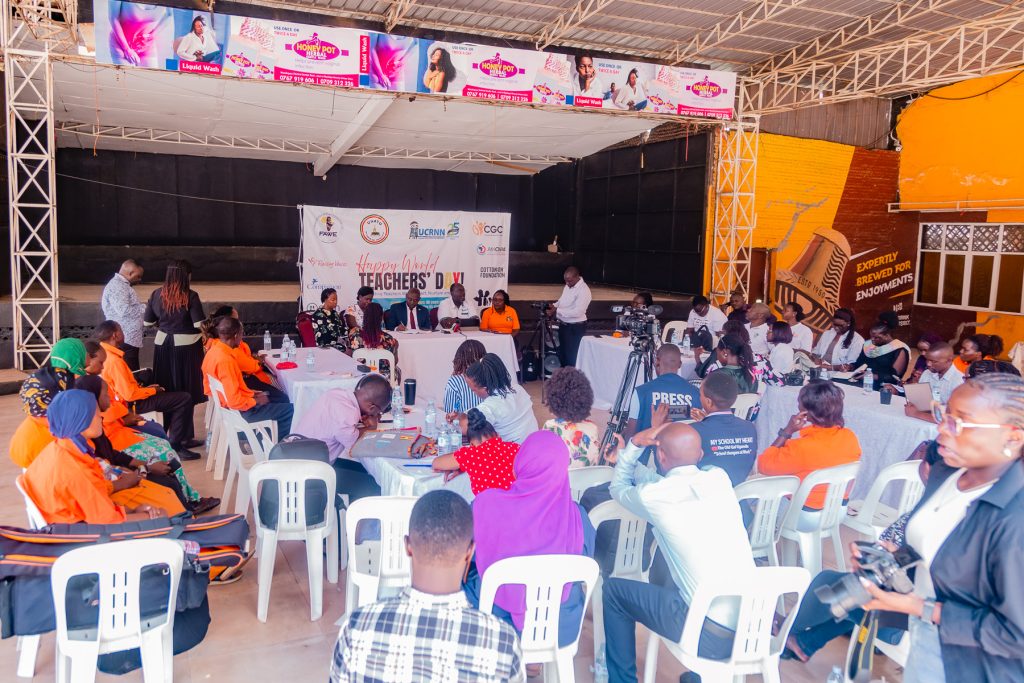
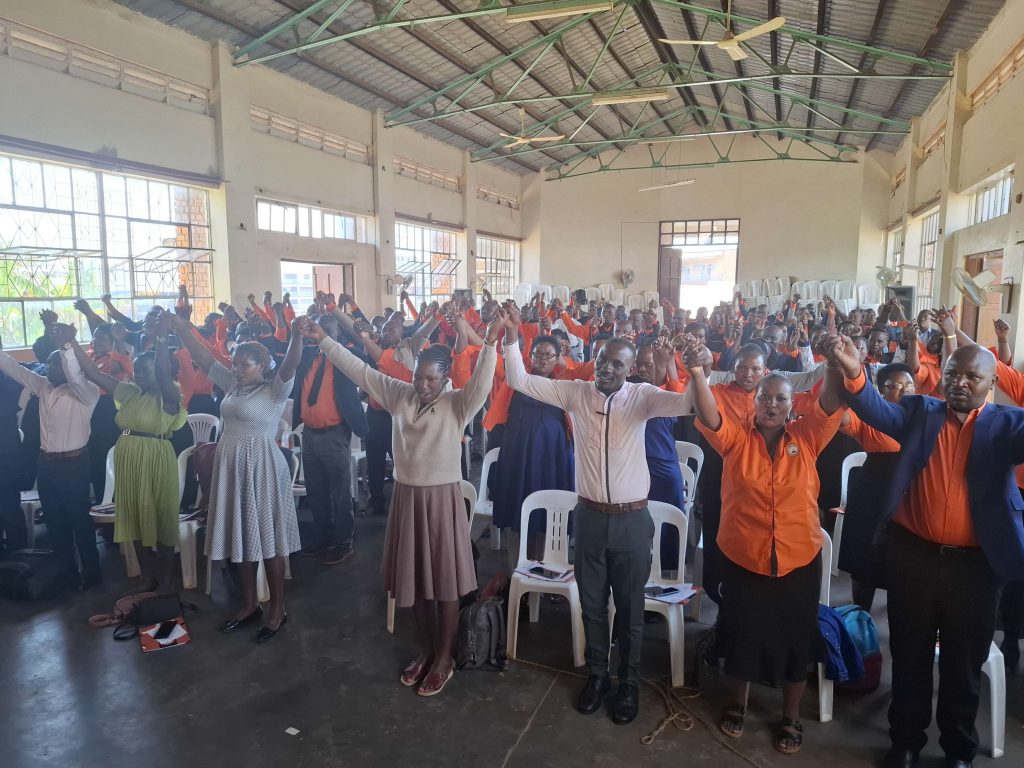
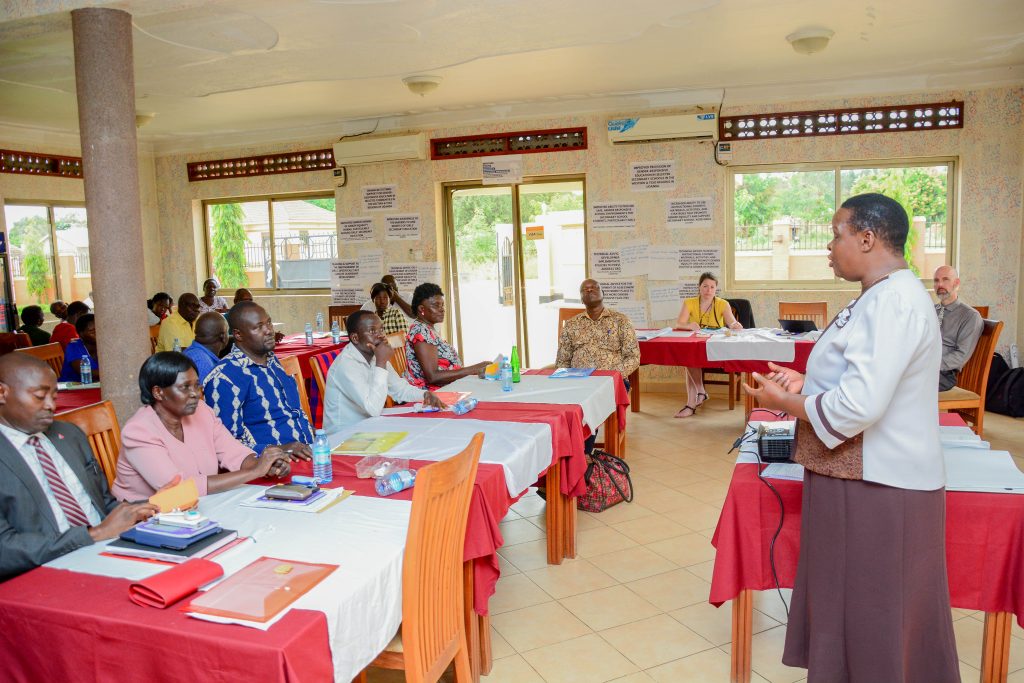
On 8th October 2024, the North-East Villa Country Resort hosted the second day of the Simameni Project Workshop, gathering representatives from Serere and Kumi districts. Participants included PTA and BoG members, the chairpersons from two districts, the Vice National Chairperson, the Regional Chairperson Teso, district officials, and the program officer Canadian Teachers’ Federation (CTF) Simameni, with discussions focusing on preventing school-related gender-based violence (SRGBV).
Welcome Remarks
Teso Regional Chairperson, Paul Ojilong, opened the workshop by expressing gratitude for the support from CTF and the Canadian government, and highlighted the longstanding partnership with UNATU. He urged Simameni Project schools to exemplify integrity within their communities and called on PTAs and BoGs to mobilize resources and maintain a safe school environment, highlighting the profound impact of SRGBV on students’ lives.
Workshop Overview
Grace Alubo, the Project Officer for Simameni in Teso, outlined the purpose of the workshop: equipping BoG and PTA members with the knowledge and skills needed to combat SRGBV. Key objectives included understanding the effects of Gender-Based Violence on education and promoting safe, inclusive school environments. She stressed the importance of BoG and PTA collaboration in fostering safer schools for all students.
CTF program Officer
CTF Program Officer, Cheryl Sheffield, spoke on about how Simameni empowers communities to prevent SRGBV. She acknowledged the unique challenges faced by marginalized girls and encouraged participants to champion SRGBV prevention through supportive networks and advocacy. Emphasizing the legacy of Simameni, she urged BoG and PTA members to sustain its initiatives and foster inclusive educational environments.
Leadership Insights and Policy Support
UNATU’s Deputy General Secretary, Duluga Buni Phillip, highlighted the need for the project to address the high SRGBV rates in Teso and Western regions. He reiterated the importance of inclusivity, child-friendly policies, and corporal punishment alternatives to ensure safe learning spaces and foster quality education.
District officials, including Kumi DEO Adong Sarah and DIS Serere, urged participants to address SRGBV challenges with effective policies and encouraged collaboration among PTAs, BoGs, and communities.
Gender Awareness and Accountability
Gender Officer Aja Joan led a session on understanding the various forms of SRGBV, discussing its root causes, such as forced marriages and gender-insensitive school environments. Participants reflected on the need for transformative leadership and continuous learning to uphold safe spaces for students.
Reflections on Canada’s Progress Against SRGBV
Cheryl Sheffield shared insights into Canada’s history and progress in addressing gender violence in schools, emphasizing inclusive education, robust legislation, and partnerships as critical factors in reducing SRGBV. Participants explored global lessons to inspire local action in creating respectful and inclusive environments for both boys and girls.
Reporting and referrals
Inspector Okure David addressed the need for reliable support systems from parents because SRGBV starts within the home, emphasizing the role of PTAs and BoGs in assisting SRGBV victims. He encouraged participants to establish reporting mechanisms and collaborate with law enforcement to ensure school safety. The issue of raising funds for case management was raised to ensure follow up on cases of SRGBV
Interactive Group Work Session
Participants engaged in group work to discuss best practices to combat SRGBV in their school communities. They proposed initiatives to build knowledge on creating safe, inclusive environments. Other notable suggestions included fostering open communication channels that promote a culture of respect and empathy, appropriate talking compounds signposts, creation of good relation between teachers and learners, parents involvement in the matters of their children, providing meals, involving learning in decision making. This session allowed stakeholders to share personal experiences and build a collective vision for safer educational spaces.
Closing Remarks
Okwalinga Grace closed the workshop by acknowledging the active engagement and dedication shown by participants. She emphasized that SRGBV prevention requires a sustained, collective commitment from all stakeholders to ensure meaningful change. She reminded PTAs and BoGs of their critical role in establishing environments where students feel valued and safe, regardless of gender. She encouraged everyone present to apply the knowledge gained and collaborate across communities to build a future free from SRGBV.
The workshop concluded with a unified call for action to safeguard educational spaces. Through continued advocacy, policy improvement, and resource mobilization, the Simameni Project remains committed to empowering communities and making schools safer for all.