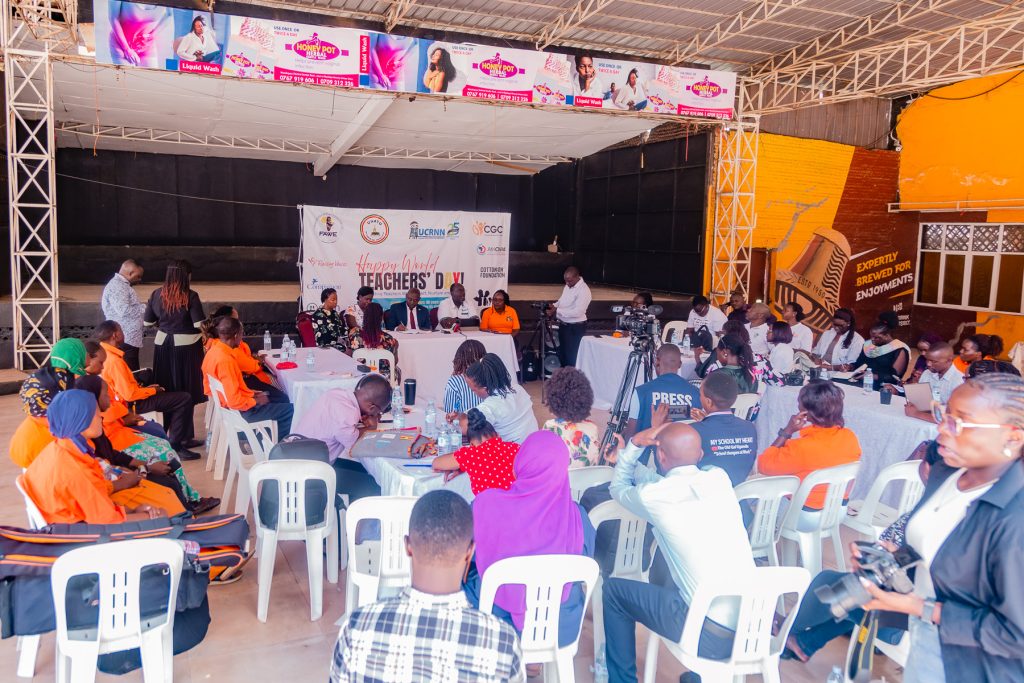
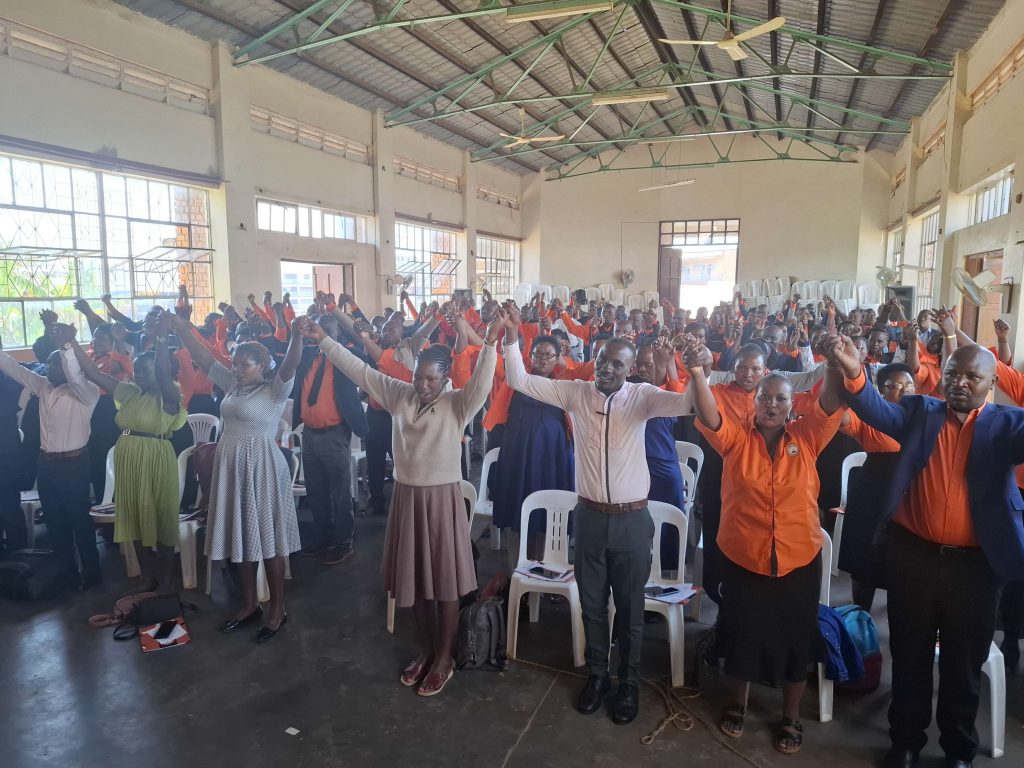
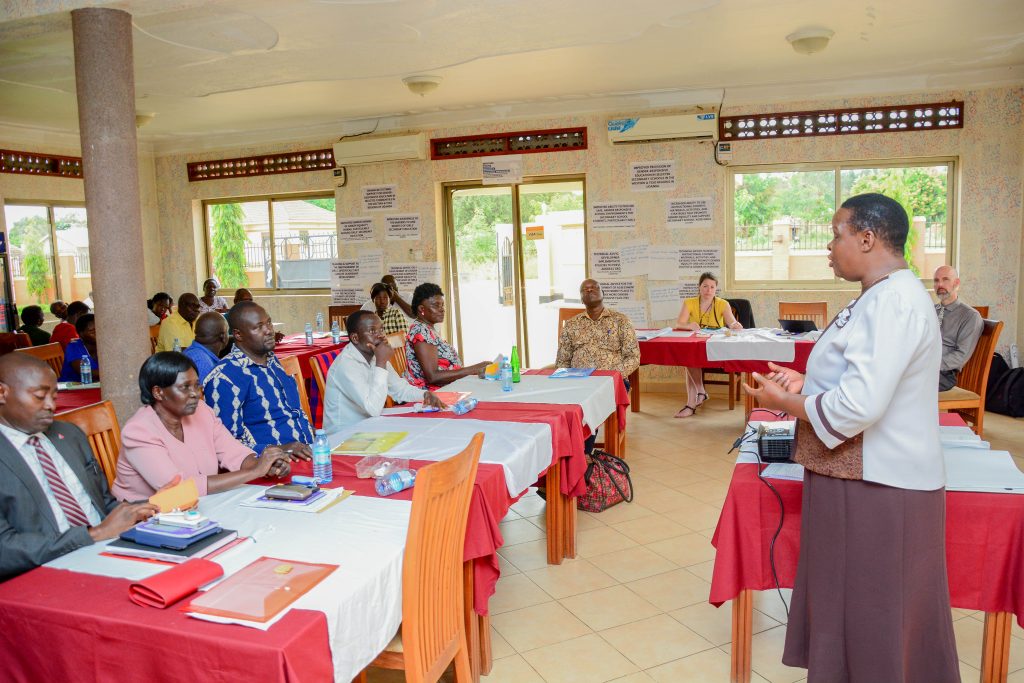
On April 12th, 2025, the Simameni Project held a follow-up meeting at Tropical Gardens Hotel, Kyenjojo District. The gathering brought together school leaders, BOG and PTA chairpersons, District Education Officers, and UNATU representatives from Kyenjojo, Kyegegwa, Kibaale, and Kamwenge. The focus was to assess progress, address gaps, and reinforce gender-responsive practices in schools.
Nuwagaba Silver, the Western Regional Coordinator, opened the session by commending participants and updating them on union matters, including condolence procedures and continued support for retired teachers under code 257. He called for collaboration and participation in the workshop.
Simameni Program Officer for the Western Region Hellen Kabagaya outlined the meeting’s objectives: strengthening School Improvement Plans (SIPs), enhancing gender-responsive infrastructure, and boosting stakeholder capacity. Reflections since the first meeting in May 2021 showed steady improvements in SIP integration, budgeting for girls’ needs, and better community attitudes, though challenges remain in some districts. She also highlighted that the project has been able to run smoothly through the efforts of CTF and the funding from Global Affairs Canada.
In his keynote, UNATU Deputy General Secretary Duluga Buni Phillip emphasized embedding gender-responsive strategies into school plans. He encouraged gender budgeting, audits, and inclusive teaching. He also spotlighted national policies like the re-entry strategy for pregnant girls and urged participants to foster safe, inclusive schools free from stigma and bullying and also focused on community engagement and tasked particpants to be ambassadors of change in their communities.
Kyegegwa’s Education Officer for Special Needs, Ampaire Grace, led a hands-on session on crafting effective SIPs. She walked participants through identifying challenges, setting SMART goals, and aligning activities with timeframes and budgets. She highlighted the importance of inclusive, practical planning and constant review of these plans which usually last for 3 years to ensure relevance and impact.
A session on Promoting Sustainable School Community Engagements was delivered jointly by the Program Officer from UNATU and the Simameni Program Officer for the Western Region. The two facilitators introduced the concept of the Education Triangle, a collaborative structure consisting of the school, the parents, and the learners. They further proposed transforming this triangle into a square by deliberately including other key stakeholders such as School Management Committees (SMCs), Boards of Governors (BOGs), and Parent-Teacher Associations (PTAs). Through guided questions, participants shared real examples of effective school-community initiatives and discussed their impact and ways to strengthen them.
Building on this, the Simameni Program Officer presented a review based on the gender-responsive checklist adopted by Simameni schools. She used Kibaale District as a case study, where significant progress had been made. It was reported that the district had now successfully achieved all the targets that had previously been lagging, signalling commendable improvement in promoting gender-sensitive education environments.
In her closing remarks, the District Education Officer (DEO) of Kyenjojo District highlighted that the Simameni initiative is committed to improving access, retention, and educational opportunities for girls. She acknowledged the impact of interventions by Simameni and development partners, stating, “Those who have ears and active brains have listened and implemented.” Referring to the school as a home, a family, and a vital social institution, she described headteachers as technical experts and the Boards of Governors and PTAs as overseers representing the wider community. She urged participants to stay informed, understand emerging policies, and cascade them accordingly. Emphasizing the importance of professional knowledge, she encouraged teachers to read and deeply understand the Education Act of 2008. She concluded with a powerful reminder: “Remember, one day we shall be accountable in one way or the other for what we were supposed to have done.”
The meeting offered valuable space for reflection, experience-sharing, and re-commitment. With stronger SIPs, better community ties, and clear guidance, the Simameni Project continues to steer schools toward inclusive, equitable education for all learners.