Date: 3rd October 2024
Venue: Tooro Royal Cottages, Kyenjojo
Project: Simameni
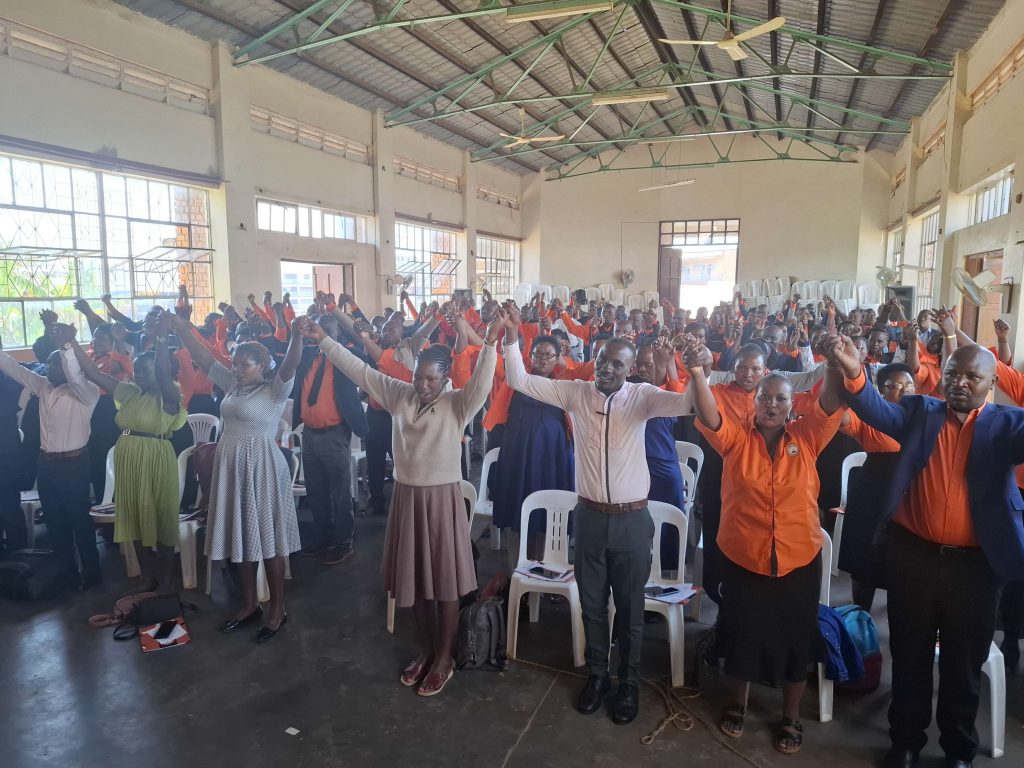
The second day of the Simameni School-Related Gender-Based Violence (SRGBV) Prevention workshop saw participants from the districts of Kamwenge and Kyenjojo gather to have discussions on addressing SRGBV in schools. Building on the momentum from the first day, the workshop aimed at empowering school leaders from the Board of Governors (BoGs) and Parents Teachers Associations (PTAs) and Simameni school Committees to take proactive steps in ensuring safe and inclusive learning environments.
Welcome Remarks by Mugenyi, Regional Chairperson, Western Region
The day commenced with a warm welcome from Mr. Mugenyi, the Regional Chairperson for the Western Region. He emphasized UNATU’s commitment as a trade union to advancing teachers’ welfare and rights, reiterating the importance of the Simameni Project. He praised school leaders for their dedication and support for Simameni over the years, urging them to continue integrating the knowledge and strategies from the program into their schools even as the project nears its conclusion.
Address by Baguma Filbert Bates, General Secretary of UNATU
In his address, the General Secretary, Mr. Baguma Filbert Bates, thanked the participants for their commitment to the Simameni program. He reminded them that although the project is ending, the knowledge and skills acquired over the past five years will remain vital in preventing SRGBV.
He urged parents to stay actively involved in their children’s upbringing, noting the challenges posed by the current technological era. He emphasized that despite the advancements in technology, parents must remain vigilant and provide guidance, especially in the context of online influences. Mr. Baguma also underscored the need to continue empowering both girls and boys, stressing that gender equality is critical for a balanced and progressive society.
Furthermore, he called on leaders to advocate for better school facilities and policies to ensure that all children have access to quality education. “Children are our future, and we must invest in their education to ensure a sustainable legacy for our families and communities,” he remarked.
Gender based violence, manifestations and perpetrators by Mbabazi Joseline, Senior Probation Officer, Social Welfare
Ms. Mbabazi Joseline, Senior Probation Officer, delivered a powerful session on the seriousness of gender-based violence (GBV) as a human rights, health, psychological, and economic concern. She highlighted key statistics, noting that 22% of women and 8% of men in Uganda have experienced sexual violence. She also discussed various forms of GBV, including domestic violence, child sexual abuse, forced prostitution, and harmful traditional practices like female genital mutilation (FGM).
She urged participants to take their roles seriously in addressing SRGBV, especially by fostering school-community relations and ensuring schools are safe environments for both girls and boys. Ms. Mbabazi called on leaders to leverage their influence in budgeting and policy-making to create safer school environments and support GBV survivors.
Reflection on Addressing SRGBV in Schools by Aja Joan, UNATU Gender Officer
Ms. Aja Joan facilitated a reflection session with participants, emphasizing the importance of their roles as BoGs, PTAs, and school committee members in preventing SRGBV. She urged participants to focus on proper resource utilization, accountability, and the follow-up of learners to prevent school dropouts.
Ms. Aja also stressed the need for participants to deepen their scope beyond their immediate roles to ensure a holistic approach in creating a conducive learning environment. She encouraged stakeholders to be agents of change in promoting gender equality and addressing school-related violence. “Schools do not exist in space but are part of the community,” she said, “and we must promote school-community relations for the betterment of our children.”
Support, Reporting, and Referrals for GBV Cases by Police Officer Agnes Okidi (CFPU)
Police Officer Agnes Okidi, representing the Child and Family Protection Unit (CFPU), provided insights into how schools and communities can support and report GBV cases. She highlighted the importance of creating a friendly environment for victims to come forward, ensuring medical checkups, and the role of schools in supporting victims throughout the reporting process.
Officer Okidi emphasized the need for schools to budget for case management to ensure that cases are followed through to completion. She also urged the PTA and BoGs to be vigilant and supportive, reminding participants that teachers, parents, and health workers play key roles in the recovery process for GBV survivors.
Group Session: Reflections on Creating Safe Schools
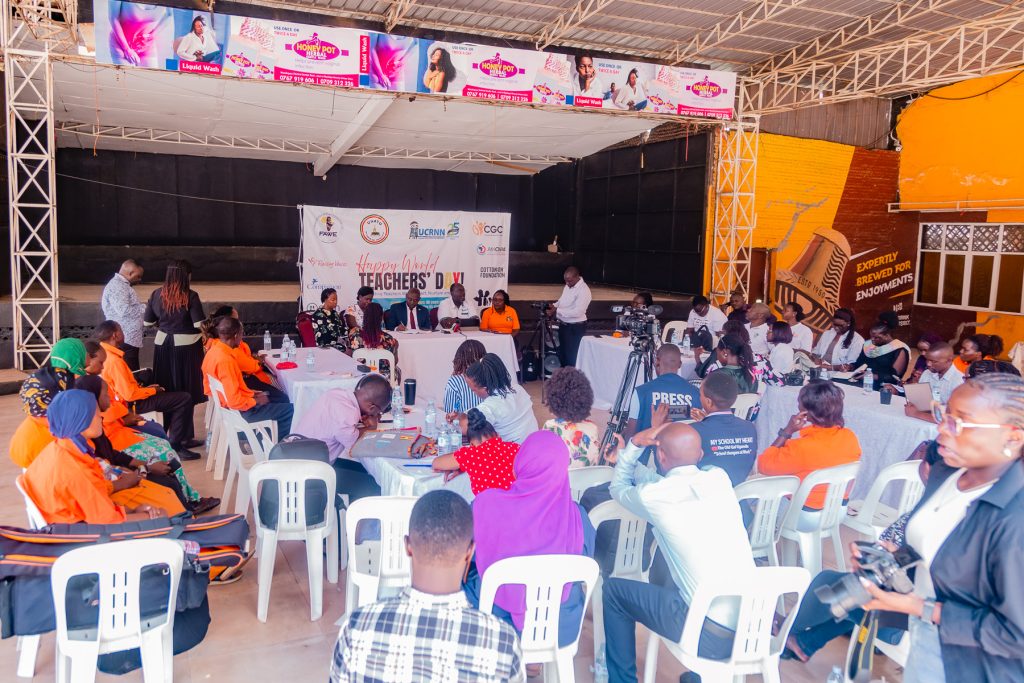
In a collaborative group session, participants broke out into smaller groups representing their respective schools to reflect on strategies for creating safe schools. The group presentations yielded various insights, including the need for sensitization of staff members, budgeting for case management, and maintaining vigilance in environments where SRGBV is likely to occur. Participants emphasized the importance of collective responsibility in preventing SRGBV and ensuring that school environments are secure for all learners.
Closing Remarks by Mwesigye Hussein, District Education Officer, Kyegegwa
In his closing remarks, Mr. Mwesigye Hussein, the District Education Officer (DEO) for Kyegegwa, expressed gratitude to UNATU and the Simameni project for choosing Kyegegwa as one of the beneficiary districts. He acknowledged the wealth of knowledge shared during the workshop and urged school leaders to take their responsibilities seriously, especially regarding SRGBV prevention.
He noted the concerning statistics around teenage pregnancy and school dropouts in Uganda and called for critical implementation of action plans by both BoG and PTA members. Mr. Mwesigye also emphasized the need for continued advocacy and collaboration among school leaders, parents, and communities to ensure that all children have the opportunity to complete their education in a safe and supportive environment.






Thanks to UNATU for the support
You are Welcome